India’s textile heritage is a vibrant tapestry of regional craftsmanship, and few states showcase this artistry as beautifully as West Bengal. Known for its intellectual legacy, cultural festivals, and artistic excellence, the state is also home to some of the most exquisite handloom traditions in the country. Among them, Baluchari and Tant sarees stand out as symbols of elegance, storytelling, and everyday grace.
These sarees are not just garments—they are woven narratives of history, devotion, and Bengali identity.
The Cultural Legacy of Bengal’s Handloom Industry
Weaving in Bengal dates back centuries. The fertile lands along the Ganges delta supported cotton cultivation, while royal patronage during the Mughal era encouraged silk weaving. Over time, Bengal became a flourishing center of textile artistry.
Even today, rural weaving clusters continue to preserve age-old techniques. Families pass down skills from one generation to the next, ensuring that each saree carries tradition within its threads.
Baluchari Sarees: Woven Stories in Silk
Baluchari sarees are known for their intricate designs and narrative pallus. Originating in the Murshidabad region, these sarees were traditionally patronized by aristocrats and zamindars.
Historical Background
The craft is believed to have flourished in the 18th century under Mughal influence. Persian aesthetics blended with Hindu mythological themes, resulting in unique storytelling motifs woven directly into the fabric.
Though the original weaving center declined due to floods and economic challenges, the craft was revived in Bishnupur, where artisans continue the legacy today.
Unique Features of Baluchari Sarees
Mythological Narratives
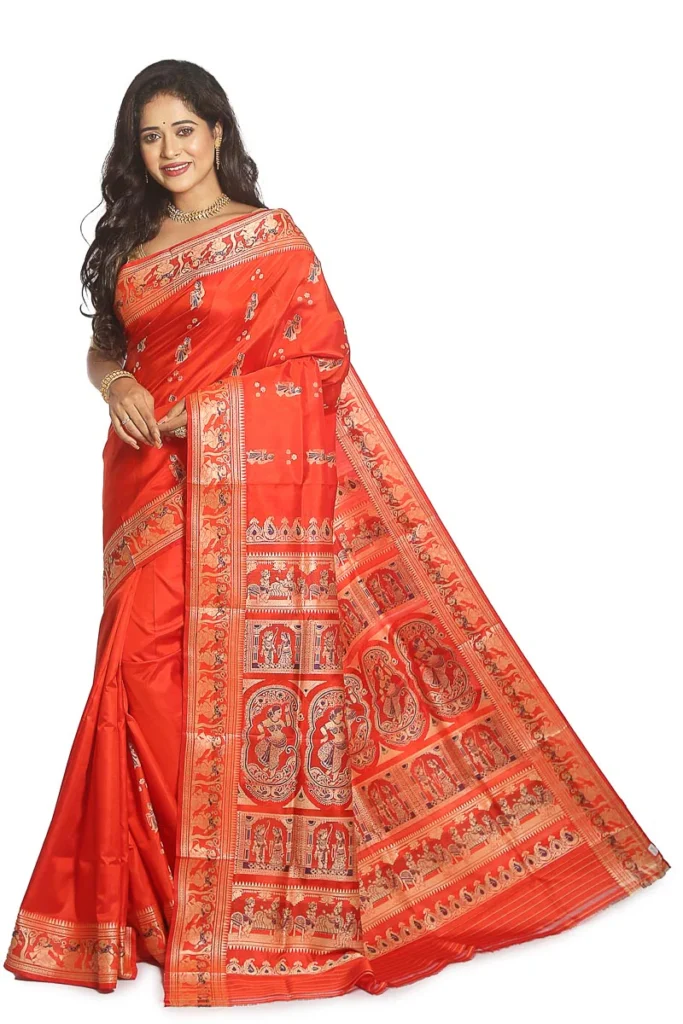
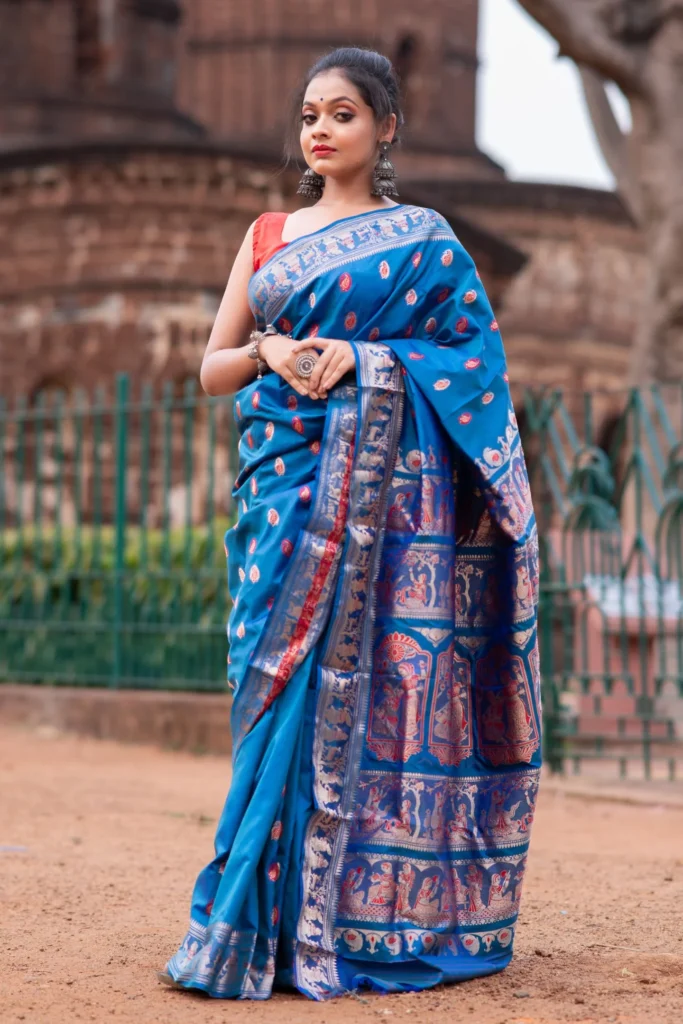
The most distinctive feature is the elaborate pallu depicting scenes from epics like the Ramayana and Mahabharata.
Rich Silk Base
Traditionally woven in silk, Baluchari sarees have a soft yet luxurious texture.
Intricate Borders
Detailed motifs of temples, dancers, animals, and floral vines adorn the borders.
Subtle Elegance
Unlike heavily embellished bridal sarees, Balucharis focus on woven artistry rather than embroidery.
Why Baluchari Sarees Are Special
Each Baluchari saree can take days or even weeks to complete. The weaving process requires precision, creativity, and patience. Because the designs are woven—not printed—they last for decades when properly maintained.
These sarees are often chosen for:
Weddings
Cultural ceremonies
Festive celebrations
Formal events
Owning a Baluchari saree is like owning a piece of art.
Tant Sarees: The Everyday Elegance of Bengal
While Baluchari sarees represent royal artistry, Tant sarees embody simplicity and comfort. They are the heartbeat of Bengali daily wear.
What is a Tant Saree?
“Tant” means handwoven cotton fabric. These sarees are lightweight, breathable, and perfect for humid climates. Bengal’s weather makes cotton weaving both practical and popular.
Key Features of Tant Sarees
Lightweight Fabric
Perfect for daily wear and long working hours.
Crisp Texture
Freshly starched Tant sarees have a distinct crispness.
Bold Borders
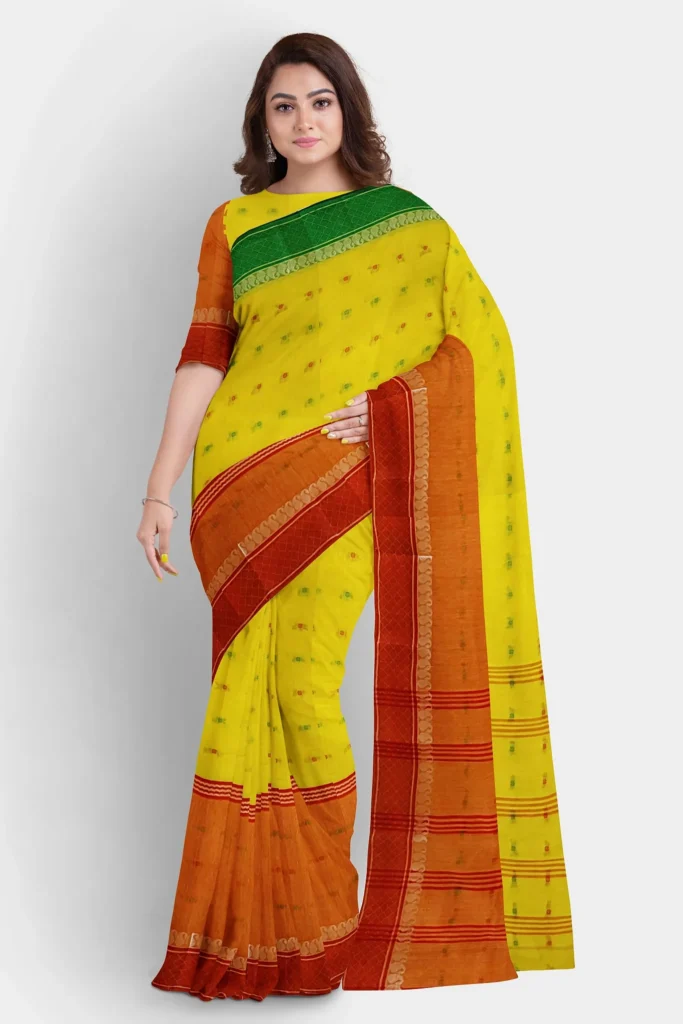
Typically feature contrasting borders in red, blue, green, or black.
Traditional Motifs
Paisleys, flowers, and geometric patterns are common.
Cultural Importance of Tant Sarees
Tant sarees are deeply woven into Bengali identity. During festivals like Durga Puja, women often wear traditional white sarees with red borders—a style strongly associated with Bengal’s cultural imagery.
Teachers, artists, and professionals frequently choose Tant sarees for their elegance and practicality. They symbolize grace without extravagance.
The Artisan Communities Behind the Craft
The beauty of Baluchari and Tant sarees lies in the hands that create them. Many weaving families in rural Bengal depend entirely on this craft for their livelihood.
However, the journey hasn’t always been easy. Competition from power looms and cheaper imitations has affected artisan income. Despite these challenges, handloom cooperatives and government initiatives are helping preserve the tradition.
By choosing authentic handwoven sarees, customers directly support artisan communities and sustain centuries-old craftsmanship.
The Revival of Bengal’s Sarees in Modern Fashion
In recent years, designers and boutiques have reintroduced Bengal’s weaves to younger audiences.
Modern adaptations include:
Contemporary color palettes
Minimalist Baluchari designs
Soft linen-cotton Tant blends
Designer blouses paired with traditional drapes
Social media has also played a role in reviving interest. Younger generations are rediscovering handloom sarees as sustainable and stylish alternatives to fast fashion.
Baluchari vs. Tant: Understanding the Difference
Feature Baluchari Saree Tant Saree
Fabric Silk Cotton
Weight Medium to heavy Lightweight
Occasion Weddings, formal events Daily wear, festivals
Design Mythological woven motifs Simple borders & patterns
Price Range Higher Affordable
Both sarees reflect different aspects of Bengali life—celebration and simplicity.
Why These Sarees Remain Timeless
The strength of Bengal’s weaving traditions lies in their balance between art and practicality. Baluchari sarees preserve storytelling through silk threads, while Tant sarees celebrate everyday grace.
In a time when machine-made garments dominate the market, handcrafted textiles carry emotional and cultural value. They remind us that fashion can be meaningful, not just trendy.
Caring for Baluchari and Tant Sarees
To preserve their beauty:
For Baluchari (Silk):
Dry clean only
Store in muslin cloth
Avoid direct sunlight
Refold periodically to prevent creases
For Tant (Cotton):
Gentle hand wash
Light starch for crisp finish
Dry in shade
Proper care ensures these sarees last for generations.
The Future of Bengal’s Weaving Heritage
With increasing awareness about sustainability and slow fashion, handloom sarees are gaining renewed appreciation. Customers are becoming more conscious about where their clothes come from and who makes them.
As long as artisans continue weaving stories into silk and cotton, the legacy of West Bengal’s Baluchari and Tant sarees will thrive.
Conclusion
The weaving traditions of West Bengal reflect a harmonious blend of art, history, and daily life. Baluchari sarees capture grand narratives in silk, while Tant sarees offer comfort wrapped in tradition.
Together, they represent the soul of Bengal—creative, resilient, and deeply rooted in culture. Choosing these sarees is not just a fashion decision; it is a celebration of heritage and craftsmanship that has stood the test of time.

Leave a Reply